Introduction: Revolutionizing the Media Landscape with AI
The technological evolution of Artificial Intelligence (AI) is reshaping industries across the globe—and the media and entertainment (M&E) sector is no exception. Over the next decade, AI is projected to become a powerful enabler of creativity, personalization, and operational efficiency in the world of content creation, distribution, and consumption. According to recent market analysis, the global AI in media and entertainment market is poised for significant growth between 2025 and 2033.
In this blog post, we dive deeper into the forecast, key trends, and driving factors contributing to AI’s expanding role in this dynamic industry.
Market Overview: Growth Trajectory from 2025–2033
The integration of AI technologies in the M&E space is forecasted to experience exponential growth, driven by data-driven strategies, consumer demand for personalized content, and automation-based production processes. Market research shows substantial year-over-year growth through the 2025–2033 period, attributed to increasing adoption rates and technological advancements.
Future Market Size and CAGR
The global AI in media and entertainment market, valued at billions in 2025, is expected to multiply impressively by 2033. Analysts project a compound annual growth rate (CAGR) that illustrates AI’s accelerating adoption in the industry.
Key Drivers of Market Growth
A booming digital era combined with powerful AI toolsets is expanding the possibilities for content creators, media producers, and consumers alike. The primary growth drivers include:
1. Demand for Personalized Content
Audiences today demand hyper-personalized content experiences. Streaming services, news platforms, and social media channels are increasingly implementing machine learning and recommendation algorithms to deliver content tailored to user preferences.
2. Automation of Production Processes
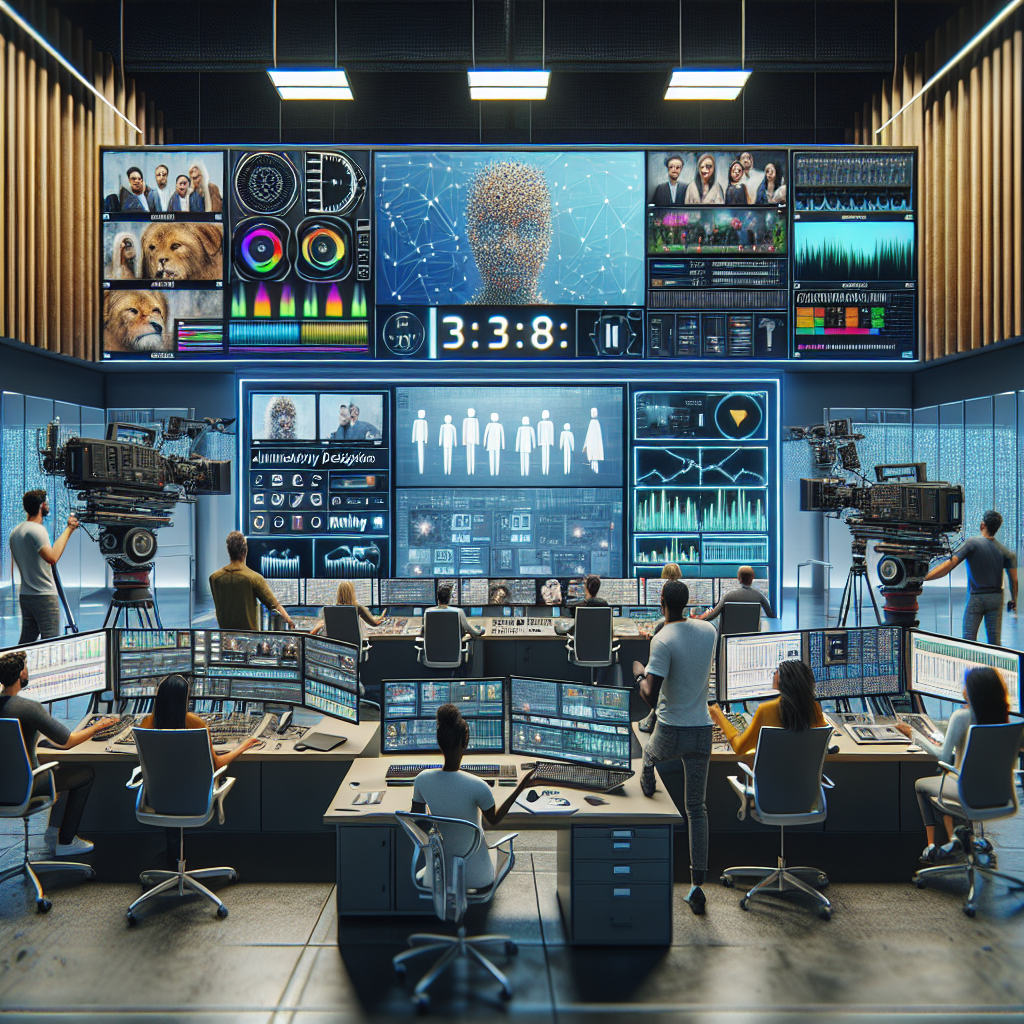
Content creation and post-production activities, such as video editing, subtitle generation, and voice modulation, are leveraging AI tools to improve efficiency. This not only saves time but also reduces production costs.
3. Real-time Analytics and Predictive Insights
AI provides real-time data on viewer engagement, content performance, and market trends, allowing media companies to adjust strategy on the fly.
4. Enhanced User Experience with AR/VR and AI
Immersive experiences powered by Augmented Reality (AR) and Virtual Reality (VR) are further enhanced by AI. These technologies are expected to dominate future entertainment platforms, especially in gaming and virtual events.
Segment Analysis: Applications Within the Industry
AI’s integration in media and entertainment is not confined to a single area. It spans several segments of the value chain—from content production to customer feedback analysis.
Content Creation
In content creation, AI is becoming a creative partner, helping artists produce music, generate scripts, and create visual effects.
Personalization Engines
Algorithms fine-tune and personalize content recommendations to keep audiences engaged longer and reduce churn.
Advertising and Marketing
AI transforms marketing campaigns into strategic, data-backed engines for revenue growth.
Regional Outlook: Prominent Markets Driving AI Adoption
North America
North America continues to dominate AI adoption in media, owing to the presence of industry giants and a conducive technological landscape. The U.S. leads with rapid AI integration across content houses, film studios, and streaming platforms.
Europe
European nations are gaining momentum with investment in AI research and digital transformation in broadcasting.
Asia-Pacific
Fast-paced digital ecosystems and rising media consumption in countries like China, India, and South Korea are fueling AI-based innovation in entertainment.
Challenges and Considerations
Despite massive potential, the AI market in media and entertainment faces specific challenges:
Data Privacy Concerns
Personalization demands data access, raising concerns about user privacy and compliance regulations.
Creative Limits and Ethical Concerns
There’s an ongoing debate surrounding AI-generated content vs. human creativity, especially in areas like filmmaking, journalism, and music.
High Initial Investment
Implementation of advanced AI tools requires significant upfront costs, making it harder for SMBs or independent creators to compete.
Future Outlook: What to Expect by 2033
The trajectory for AI in the media and entertainment industry looks extremely optimistic. By 2033, expect:
Continuous advancement in Generative AI, Natural Language Processing (NLP), and predictive analysis will unlock new experiences for both creators and audiences. Businesses that adapt early will hold the competitive edge in delivering richness in content, scale in operations, and excellence in customer engagement.
Conclusion
As content consumption continues to go digital, the role of AI in shaping the future of the media and entertainment industry has never been more vital. Between 2025 and 2033, the market is expected to grow at an impressive rate, driven by technological innovations, surging consumer expectations, and advancements in production automation.
For businesses in media and entertainment, this decade represents a pivotal period of transformation. Embracing AI not only ensures competitiveness but also opens the door to a future where creativity and technology harmonize to deliver unprecedented viewer experiences.
Companies that harness the power of AI today will be tomorrow’s industry leaders.